How Material Choices Shape Your Total Hardscaping Investment
Material selection forms the foundation of every hardscaping budget. In Passaic and surrounding areas, homeowners typically choose between concrete pavers, natural stone, and poured concrete, with each material carrying distinct cost implications and performance characteristics. Concrete pavers range from $8 to $25 per square foot installed, offering durability and design flexibility at a moderate price point. Natural stone, including bluestone and flagstone popular in northern New Jersey landscapes, commands $20 to $45 per square foot due to quarrying, transportation, and the skilled labor required for proper installation.
Poured concrete represents the most economical option at $6 to $15 per square foot, though decorative finishes such as stamping or staining can push costs toward $18 per square foot. The choice between these materials should account for more than initial cost. In North Jersey’s freeze-thaw climate, material durability matters significantly. Pavers and natural stone allow individual piece replacement when damage occurs, while poured concrete typically requires wholesale section replacement if cracking develops.
Experienced landscaping services providers evaluate site-specific factors before recommending materials. Soil composition in Passaic varies considerably, with clay-heavy soils in some neighborhoods requiring additional base preparation to prevent settling. This site preparation can add $3 to $8 per square foot to any hardscaping project, but skipping this step invites costly repairs within three to five years. When evaluating material quotes, confirm that estimates include proper base installation, edge restraints, and polymeric sand for paver joints, as these components ensure long-term performance regardless of the surface material chosen.
What a Quality Patio Installation Really Costs in Northern New Jersey
Patio installation costs in northern New Jersey typically range from $3,500 for a basic 200-square-foot concrete pad to $18,000 or more for an expansive natural stone entertainment area. The median project in Passaic falls between $7,500 and $12,000 for a 300-square-foot paver patio with standard borders and modest grade adjustments. These figures reflect complete installation including excavation, base preparation, material delivery, and finishing work.
Three primary factors drive patio pricing beyond material selection. Site accessibility determines equipment options and labor efficiency. Properties in established neighborhoods like those near Passaic’s Third Ward often have limited access requiring hand-digging and wheelbarrow transport, which can increase labor costs by 25 to 40 percent compared to projects where skid steers reach the work area directly. Existing grade and drainage present the second significant cost variable. Level yards with adequate drainage require minimal site preparation, while sloped properties or areas with standing water issues demand extensive base work, sometimes including French drains or catch basins that add $1,200 to $3,500 to project totals.
Design complexity represents the third cost driver. Simple rectangular patios with running bond paver patterns cost considerably less than curved edges, multiple elevations, or intricate herringbone patterns that require additional cutting and skilled installation time. From April through June and again in September and October, demand for landscape services peaks in the Passaic area, sometimes extending project timelines and reducing scheduling flexibility. Homeowners planning patio installations often find better availability and occasionally more competitive pricing during early spring or late fall, though weather limitations make these windows less predictable.
Quality patio installation includes several components that protect your investment. Proper base depth (typically 6 to 8 inches of compacted gravel) prevents settling. Edge restraints contain pavers and maintain pattern integrity. Polymeric sand between joints resists weed growth and ant infiltration. When reviewing quotes from construction services providers, confirm these elements appear in the scope of work rather than as optional upgrades.
Creating Balanced Landscape Zones
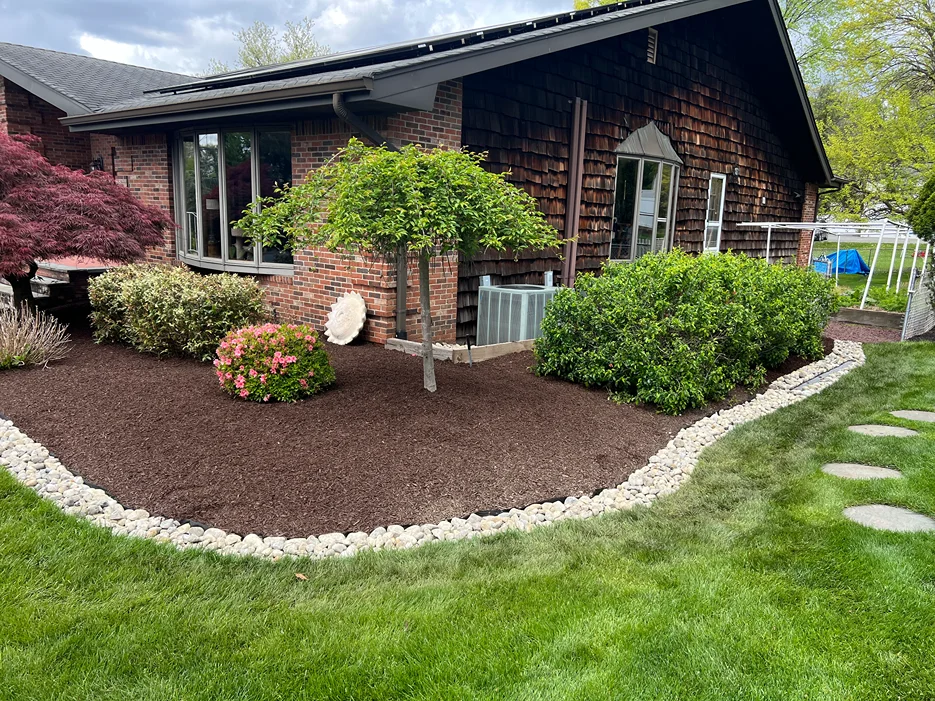
Effective landscape design relies on strategic zoning that assigns specific materials to areas based on their intended function. Mulch beds work best around plantings where moisture retention and soil enrichment are priorities. Stone features excel in high-traffic zones, drainage corridors, and areas requiring minimal maintenance. Combining these materials thoughtfully creates visual interest while addressing practical needs.
Start by identifying primary circulation routes through your yard. Pathways constructed from flagstone or gravel allow easy navigation and define the landscape’s flow. Border these hardscaped areas with mulched planting beds that introduce color and softness. This layering effect adds depth and guides the eye through the space naturally.
Transition zones between lawn areas and garden beds benefit from stone edging, which establishes clean boundaries and prevents mulch migration. Select edging materials that match or complement your primary stone features for visual cohesion. When working with sloped terrain common in northern New Jersey properties, terraced beds using retaining walls filled with mulched plantings can prevent erosion while creating dramatic visual impact. These design principles transform ordinary yards into structured outdoor environments that feel intentional and well-maintained.
Understanding Retaining Wall Costs from Foundation to Finished Height
Retaining wall costs vary more dramatically than other hardscaping elements because structural requirements scale with wall height and soil pressure. In Passaic and Wayne, basic landscape walls under three feet tall cost $25 to $45 per square foot of wall face, while engineered walls exceeding four feet can reach $75 to $125 per square foot due to permit requirements, engineering stamps, and reinforcement specifications mandated by local building codes.
Wall material selection significantly impacts both upfront costs and long-term appearance. Segmental concrete block systems dominate the residential market, offering good aesthetics and structural performance at moderate cost. Natural stone walls command premium pricing, $65 to $150 per square foot, justified by their timeless appearance and exceptional durability. Timber walls represent the most economical option at $15 to $30 per square foot but require replacement every 15 to 25 years as wood deteriorates, making them less cost-effective over a property ownership cycle.
Several factors beyond material choice influence retaining wall budgets. Soil type and drainage conditions at the site determine whether standard installation suffices or if additional drainage systems become necessary. Clay soils common throughout parts of Passaic retain water behind walls, creating hydrostatic pressure that can cause failure if not properly addressed through drainage aggregate and weep systems. These drainage enhancements add $8 to $18 per linear foot but prevent the complete wall failure that necessitates costly rebuilds.
Wall height triggers different regulatory and engineering requirements. Walls under four feet typically proceed without engineering in most North Jersey municipalities, though local requirements vary. Taller walls require engineered plans, building permits, and sometimes inspections that add $800 to $2,500 to project costs before the first block is set. Geographic reinforcement (geogrids) becomes necessary for taller walls or those retaining steep slopes, adding material and installation costs but ensuring structural integrity for decades.
Experienced teams evaluate not just the wall itself but how it integrates with your property’s overall drainage. A retaining wall that solves a slope issue but directs water toward your foundation or a neighbor’s property creates new problems. Quality landscaping companies address these concerns during initial planning, potentially incorporating swales, catch basins, or underground drainage pipes that add upfront cost but protect your investment and maintain good neighbor relations.
Why Spring and Fall Are Make-or-Break Seasons for Hardscaping Budgets in Passaic
Driveway installation represents one of the largest hardscaping investments homeowners make, with total costs ranging from $4,500 for a basic single-car asphalt driveway to $35,000 or more for an expansive paver driveway with decorative borders and multiple vehicle capacity. In Passaic and surrounding communities, the typical two-car driveway spans 400 to 600 square feet, with asphalt installations averaging $2,800 to $6,500, concrete driveways running $4,200 to $9,500, and paver driveways commanding $8,000 to $18,000 depending on material selection and site conditions.
Asphalt remains the most economical driveway surface, costing $7 to $13 per square foot installed. It provides good winter traction and relatively easy snow removal, though it requires resealing every three to five years at $0.25 to $0.50 per square foot to maintain appearance and performance. Concrete driveways cost $10 to $18 per square foot and offer 30 to 40 years of service with minimal maintenance beyond occasional crack sealing. Decorative concrete with borders, stamps, or staining increases costs to $15 to $25 per square foot but delivers distinctive curb appeal.
Paver driveways represent the premium option at $18 to $35 per square foot installed. Their individual unit construction allows easy repair of any damaged section without visible patches that plague concrete and asphalt repairs. In northern New Jersey’s freeze-thaw environment, this repairability provides long-term value despite higher initial investment. Paver driveways also offer the greatest design flexibility, accommodating curves, multiple colors, and decorative patterns that complement home architecture.
Driveway installation costs extend beyond surface material. Proper base preparation remains critical, particularly in areas with clay soils or high water tables. A driveway base typically requires 8 to 12 inches of compacted aggregate, with deeper bases necessary where soil conditions are poor. Inadequate base preparation, unfortunately common with low-bid concrete contractors, leads to settling, cracking, and premature failure that costs more to remedy than proper initial installation.
Existing driveway removal adds $2 to $4 per square foot to project costs when replacing an old surface. Driveway grade and pitch require careful planning to ensure water drains away from garage entries and doesn’t pool on the surface or direct water toward foundation walls. Connecting to street level sometimes requires coordination with municipal regulations regarding curb cuts and apron specifications. Working with established landscape services providers familiar with local requirements prevents costly permit delays or required modifications after installation begins.
Driveway projects scheduled during northern New Jersey’s peak building season (May through September) sometimes face premium pricing and extended timelines as contractors balance multiple commitments. Projects begun in April or October may offer more immediate availability, though weather windows grow shorter as seasons change. Understanding these timing considerations helps homeowners plan realistic schedules and potentially capture cost advantages during shoulder seasons.